Wet Hay Spontaneously Combusts and Destroys Deluxe Barn
CASE STUDY: Thompson v. King Feed & Nutrition Serv., Inc., 153 Wash. 2d 447, 105 P.3d 378 (2005)
Wet Hay Spontaneously Combusts and Destroys Deluxe Barn
Facts:
Our client, Thompson, rented his barn in Enumclaw, Washington to a local feed business to store the hay it collected from several surrounding farms. Thompson was not involved in any aspect of the operation—he simply rented space in his barn for hay storage. Thompson was not an expert in hay collection and storage but the feed company was.
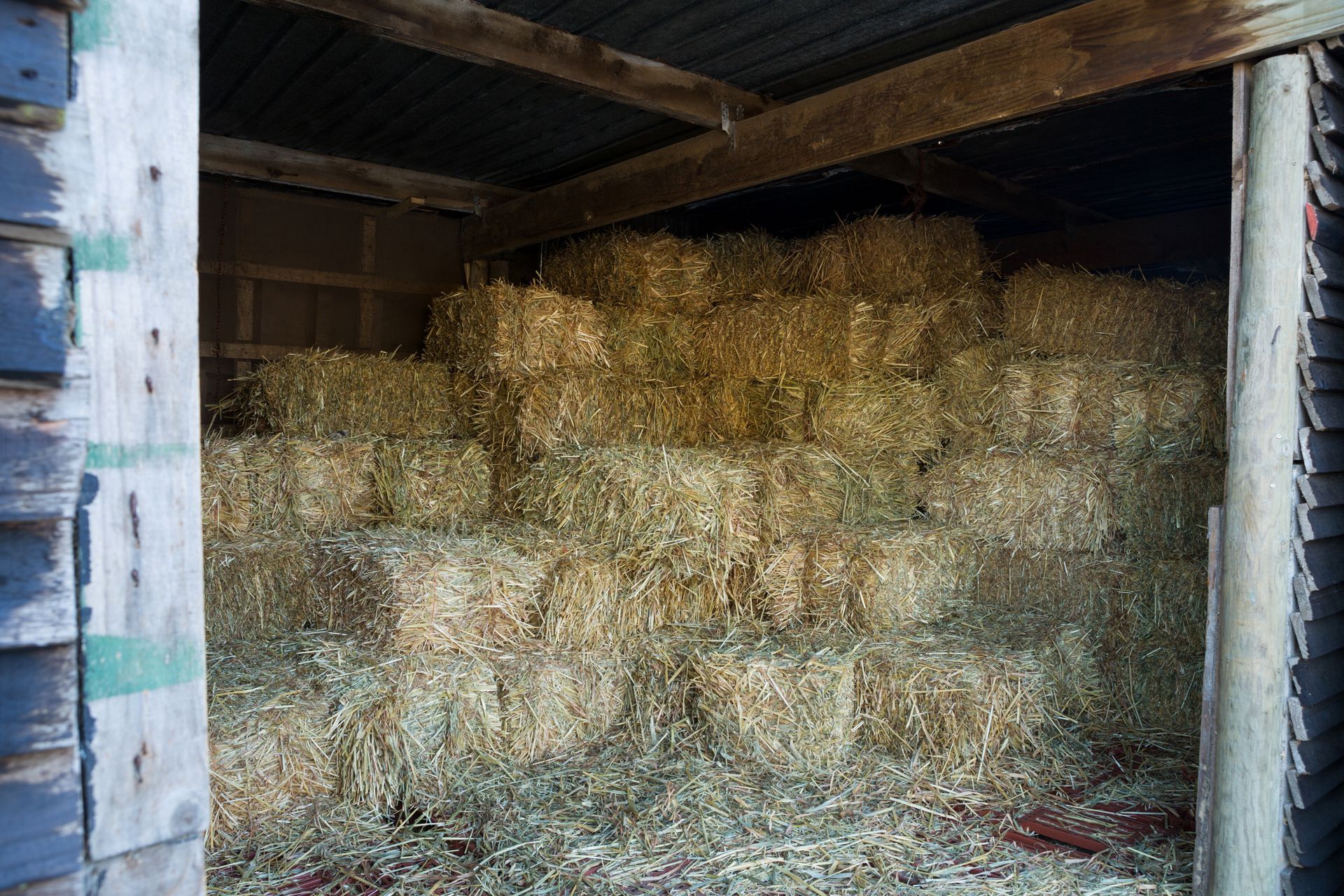
The dry hay was stored on the second story of the barn. Wet hay was stored outside on the north wall of the barn under a lean-to roof. In August 1998, the hay on the north wall caught fire, and the barn and all its contents were destroyed.
Negligence Issues. Fire investigators concluded that the most likely cause of the fire was spontaneous combustion of wet hay which was not dried, stored, or monitored correctly in accordance with industry standards. Spontaneous combustion occurs when wet hay undergoes biological and chemical processes that generate heat, which builds up due to the hay's insulating properties. This self-heating can lead to temperatures of 175-212°F (79-100°C), at which point the hay can spontaneously ignite.
Defendant Denial. The defense denied that the fire was caused by spontaneous combustion of wet hay. They argued that such incidents were common in eastern but not western Washington due to differences in climate and suggested maybe there was an electrical failure. At the close of the case, however, the court granted Malden’s motion for directed verdict on the cause of the fire finding that no reasonable juror would believe the likely cause of the fire was anything but spontaneous combustion of wet hay.
Damages Dilemma. The barn was unique in size, amenities, and construction quality and experts estimated it would cost $500,000 to replace it. The problem was that a barn that cost $500,000 to rebuild would likely add only $300,000 to the overall property value.
The purpose of tort law is to compensate victims who are injured or damaged by the negligence of others. The goal is to provide a remedy that will put the victim or injured party back to the status quo ante—or the exact position they were in before the negligent act caused injury.
Hypothetical:
Your neighbor negligently drives their truck into your outdoor pool and destroys it. Should they be required to pay the cost to rebuild and replace the pool or only to the extent that such a structure will actually increase property fair market value?
The issue is what is the correct measure of compensatory damages for the total destruction of the barn. Was it the cost to repair or replace the barn or the difference in the real property's fair market value before and after the fire?
The “Lesser of” Rule. For damage to real property, the measure of damages is typically the lesser of the following:
Diminution in value: The difference between the property's fair market value immediately before and immediately after the injury.
Cost of restoration: The reasonable cost of repairs necessary to restore the property to its condition before the damage.
The "lesser of" rule aims to fully compensate the victim without providing them an excessive and unreasonable windfall.
Exceptions to the rule. In certain situations, a court may award the higher cost of restoration even if it exceeds the property's diminished value. This is known as the "personal reason" exception. This exception applies when the owner has a genuine personal reason to restore the property to its original condition and the cost of restoration is not grossly disproportionate to the damage. This means that while a jury can give special consideration to an owner's personal attachment, the final award must still be reasonable in the eyes of the law.
Key takeaways:
"Lesser of" rule modified. The traditional "lesser of" rule (diminution in value vs. cost of repair) is modified in Washington to account for special circumstances.
Personal reasons matter. The owner's personal reasons for restoration are a critical factor. The property must have unique or sentimental value that the market does not capture.
Reasonableness is key. Even with a personal reason, the restoration cost cannot be "unreasonably disproportionate" to the loss in market value. The court ultimately retains control to ensure the award is fair and not an unreasonable windfall for the plaintiff.
For completely destroyed items: For completely destroyed structures, Washington law says the "lesser of" rule does not apply. Instead, the damages may be the reasonable cost to replace the item, so long as it is not unreasonably disproportionate, as determined by the personal reason standard