
Accident On Iceberg Ridge
Accident On Iceberg Ridge
I have represented both plaintiffs and defendants in personal injury cases involving automobiles, motorcycles, and boats, as well as outdoor sports including skiing and climbing.
The Case
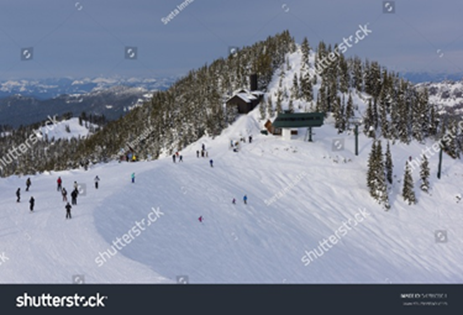
I was hired to defend a man who was sued for negligence in Pierce County Superior Court after colliding with another skier near the top of Crystal Mountain.
The Plaintiff’s Negligence Claim
The lawsuit accused my client of skiing out of control and too fast for conditions. The plaintiff argued that my client had a duty to avoid the downhill skier who had the right of way under the Skiing Responsibility Code which is used by many ski resorts throughout North America including Crystal Mountain in Washington.
My Client’s Defense
We conceded that my client had the duty to ski at safe speed and to avoid the downhill skier who had the right of way. But the facts were unique and we believed the plaintiff was actually the one at fault blame. My client testified that he was skiing in control on a relatively narrow trail when the plaintiff made a sudden hockey style stop right in front of him making the collision unavoidable. Our argument was that the plaintiff’s own negligence was the sole proximate cause of the collision which barred his claim.
The Duty to Exercise Reasonable Care
Whether driving a car or a boat or skiing down a mountain, we all have an affirmative legal duty to use reasonable care to maintain control, follow the rules of the road, and avoid doing anything that creates a foreseeable risk of injury to someone else. The failure to exercise reasonable care is called negligence.
The Rules of the Road
When driving a car down the street, you are required to follow published state and local rules of the road which include speed limits. When skiing down Crystal Mountain and many other ski resorts in North America, you are expected and required to follow the Skiing Responsibility Code which is designed to reduce risk of collisions and injuries involving people of widely varying age, ability, and condition. Any relevant violations of the code may be considered by the court and jury as evidence of negligence.
The Skiing Responsibility Code
- Always stay in control. You must be able to stop or avoid people or objects.
- People ahead or downhill of you have the right-of-way. You must avoid them.
- Stop only where you are visible from above and do not restrict traffic.
- Look uphill and avoid others before starting downhill or entering a trail.
- You must prevent runaway equipment.
- Read and obey all signs, warnings, and hazard markings.
- Keep off closed trails and out of closed areas.
- You must know how and be able to load, ride and unload lifts safely. If you need assistance, ask the lift attendant.
- Do not use lifts or terrain when impaired by alcohol or drugs.
- If you are involved in a collision or incident, share your contact information with each other and a ski area employee.
https://www.crystalmountainresort.com/the-mountain/safety
Closing Argument
The rules most relevant to our case were:
Always stay in control. You must be able to stop or avoid people or objects. People ahead or downhill of you have the right-of-way. You must avoid them. Stop only where you are visible from above and do not restrict traffic.
Of course the uphill skier has the duty to use reasonable care to avoid the downhill skier who has the right of way. But my client was in control skiing at a reasonable speed for conditions. The collision occurred on a relatively narrow trail and the plaintiff made a sudden, unexpected, hockey style stop right in front of my client who could not swerve off the trail making the collision an unavoidable accident.
Jury Verdict
The jury agreed that the plaintiff’s own negligence was the sole proximate cause of the collision and entered a defense verdict.
Lessons Learned
Jury selection is important. Many people consider skiing an inherently risky activity with frequent accidents, injuries, and collisions.
Rules of the Road are important. The Skiing Responsibility Code does not carry the force and effect of law. However, violations of industry codes may be analyzed and discussed by expert witnesses and considered by jurors as evidence of negligence.
Express and implied assumption of risk. For discussion of liability waivers and releases of claims signed by people engaging in high risk sports, see here.
Facts.
Pellham was inner tubing down the Yakima river when he collided with a fallen tree, injuring himself. He sued the tubing company, Let's Go Tubing, Inc., for negligence, arguing that they knew the log was in the river and warned others but failed to warn him.
The court ruled in favor of Let's Go Tubing, affirming the trial court's decision to dismiss the lawsuit. The Court of Appeals determined that the defense of implied primary assumption of risk applied.
The court's reasoning was based on these key points:
Inherent risk:
The court held that injuries caused by inherent and normal risks of a recreational sport or activity are not the liability of the business.
Voluntary participation:
The court reasoned that when people voluntarily engage in sports and physical activities, they consent to the inherent risks. For assumption of risk to apply, the participant must have a full, subjective understanding of the specific risk and voluntarily choose to encounter it.
Knowledge of potential hazards:
Even though Pellham was not aware of the exact log that caused his injury, he was aware that a swift current, river bends, and fallen trees were potential hazards of inner tubing down the river.
Significance of the ruling
Pellham clarified how the primary implied assumption of risk doctrine applies to sports and recreational activities in Washington state. It reinforces that participants implicitly assume the inherent risks of an activity, which can limit the liability of the businesses providing or hosting those activities. However, the defense has limits and generally does not protect a company from liability for gross negligence or for risks that are not considered inherent to the activity.